Keeping Your Heart in Check: A Look at Blood Pressure Monitors For Home
 In the modern pursuit of a healthy lifestyle, monitoring our vital signs has become increasingly important. Among these, blood pressure stands out as a critical indicator of our cardiovascular health. High blood pressure, often dubbed the “silent killer” due to its lack of obvious symptoms, can significantly increase the risk of heart disease, stroke, and kidney problems.
Thankfully, the advent of blood pressure monitors for home, also known as sphygmomanometers, has empowered individuals to take proactive control of their well-being.
What Exactly is a Blood Pressure Monitor For Home?
At its core, a blood pressure monitor is a medical device used to measure the force of blood pushing against the walls of your arteries. This measurement is expressed as two numbers:
* Systolic pressure (the top number): This represents the pressure in your arteries when your heart beats, or contracts.
* Diastolic pressure (the bottom number): This represents the pressure in your arteries when your heart rests between beats.
Both numbers are crucial. A reading is typically expressed in millimeters of mercury (mmHg), for example, 120/80 mmHg.
How Do They Work? The Science Behind the Measurement
While the specific mechanisms can vary slightly between manual and digital devices, the underlying principle remains the same: detecting and measuring the flow of blood through an artery.
The Classic Manual Monitor: A Touch of the Doctor’s Office
- Manual blood pressure monitors are still used by many healthcare professionals and are a great option for those who enjoy understanding the process. They typically consist of:
- An inflatable cuff: This is a fabric band that wraps around your arm.
- A bulb: Used to pump air into the cuff.
- A release valve: Allows you to control the rate at which air is let out of the cuff.
- A manometer: This is a gauge that displays the pressure. It can be a mercury column (traditional) or an aneroid dial (more common now).
- A stethoscope: Essential for listening to the sounds of blood flow.
The process works like this:
1. Inflation: The cuff is wrapped snugly around the upper arm, and the stethoscope’s diaphragm is placed over the brachial artery (the main artery in your upper arm). The bulb is squeezed to inflate the cuff with air.
2. Compression: As the cuff inflates, it squeezes the brachial artery, temporarily stopping blood flow.
3. Decompression and Listening: The release valve is slowly opened, deflating the cuff. As the pressure in the cuff drops, it eventually reaches a point where the heart’s pumping action can overcome the cuff’s pressure and force a small amount of blood through the artery. This is when a listener hears a Korotkoff sound (a tapping sound) through the stethoscope. The pressure reading on the manometer at this exact moment is the systolic blood pressure.
4. Continued Decompression: As the cuff continues to deflate, the artery opens more freely with each heartbeat. Eventually, the cuff pressure will drop below the pressure needed to obstruct blood flow entirely. At this point, the Korotkoff sounds disappear. The pressure reading on the manometer when these sounds cease is the diastolic blood pressure.
The Modern Digital Blood Pressure Monitors For Home: Convenience and Simplicity
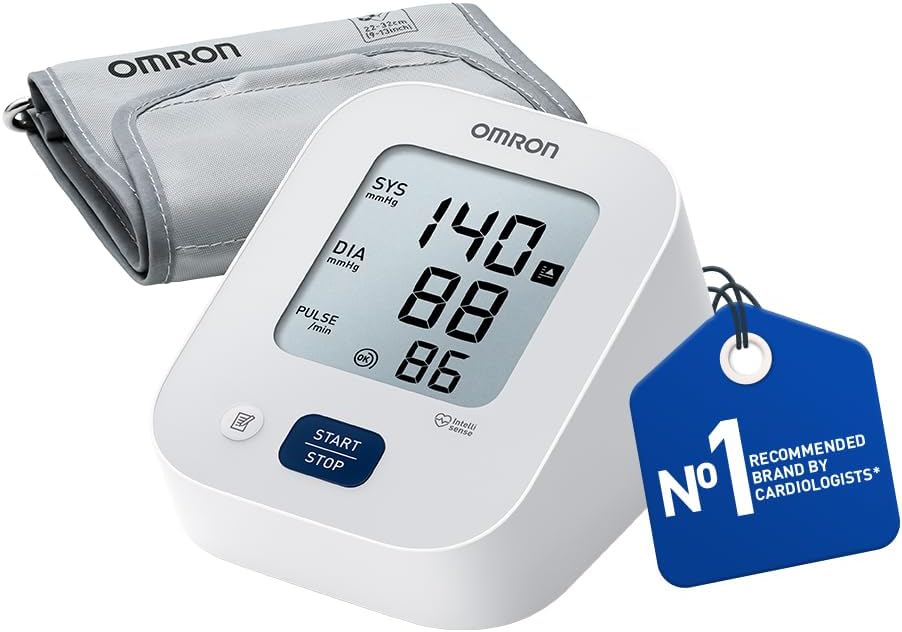
Digital Blood Pressure Monitors For Home have revolutionised home monitoring, offering ease of use and readily available readings without the need for a stethoscope or manual interpretation. They are prevalent in homes and are often the preferred choice for their convenience.
Digital monitors typically use an oscillometric method to measure blood pressure. Here’s a breakdown:
1. Inflation and Deflation: The cuff inflates automatically, similar to manual monitors. As it deflates at a controlled rate, sensors within the cuff detect tiny pressure oscillations or pulses in the artery.
2. Oscillation Detection: These oscillations occur as blood flows through the artery. When the artery is partially compressed, the blood flow is pulsatile. As the cuff pressure decreases, the amplitude of these oscillations changes.
3. Algorithm Analysis: Sophisticated algorithms within the monitor analyse the pattern and amplitude of these oscillations. They can precisely identify:
The point of maximum oscillation, which corresponds to the mean arterial pressure.
The pressure at which oscillations begin to appear, which is correlated with the systolic pressure.
The pressure at which oscillations disappear, which is correlated with the diastolic pressure.
4. Digital Display: The calculated systolic and diastolic pressures, along with the pulse rate, are then displayed clearly on a digital screen.
Types of Digital Blood Pressure Monitors For Home:
Upper Arm Monitors: These are generally considered the most accurate and are similar in placement to manual monitors.
Wrist Monitors: These are more portable and convenient for travel but require strict adherence to proper positioning (keeping the wrist at heart level) for accurate readings.
Why is Monitoring So Important?
Regular blood pressure monitors for home offer numerous benefits:
Early Detection: It allows for the early identification of high blood pressure, enabling prompt intervention and treatment.
Treatment Monitoring: It helps individuals and their doctors assess the effectiveness of medication and lifestyle changes.
Understanding Your Body: It provides valuable insights into how your blood pressure fluctuates throughout the day and in response to different activities, stress, or diet.
Empowerment: It gives you a sense of agency over your health and encourages a more proactive approach to well-being.
Choosing the Right Blood Pressure Monitors For Home and Using It Correctly
When selecting blood pressure monitors for home, consider its accuracy (look for devices validated by reputable organisations), ease of use, and comfort. It’s also crucial to follow the manufacturer’s instructions for use carefully. For reliable readings, remember to:
- Rest for at least five minutes before taking your reading.
- Sit comfortably with your back supported and feet flat on the floor.
- Ensure your arm (if using an upper arm monitor) is supported at heart level.
- Avoid talking or moving during the measurement.
- Take multiple readings and average them if recommended by your doctor.
In conclusion
Blood Pressure Monitors For Home are indispensable tools for maintaining a healthy cardiovascular system. Whether you opt for the classic manual approach or the modern digital convenience, the ability to accurately measure your blood pressure empowers you to be an active participant in your own health journey, helping to keep your heart in check for years to come.

📅 Last updated: